
PAID
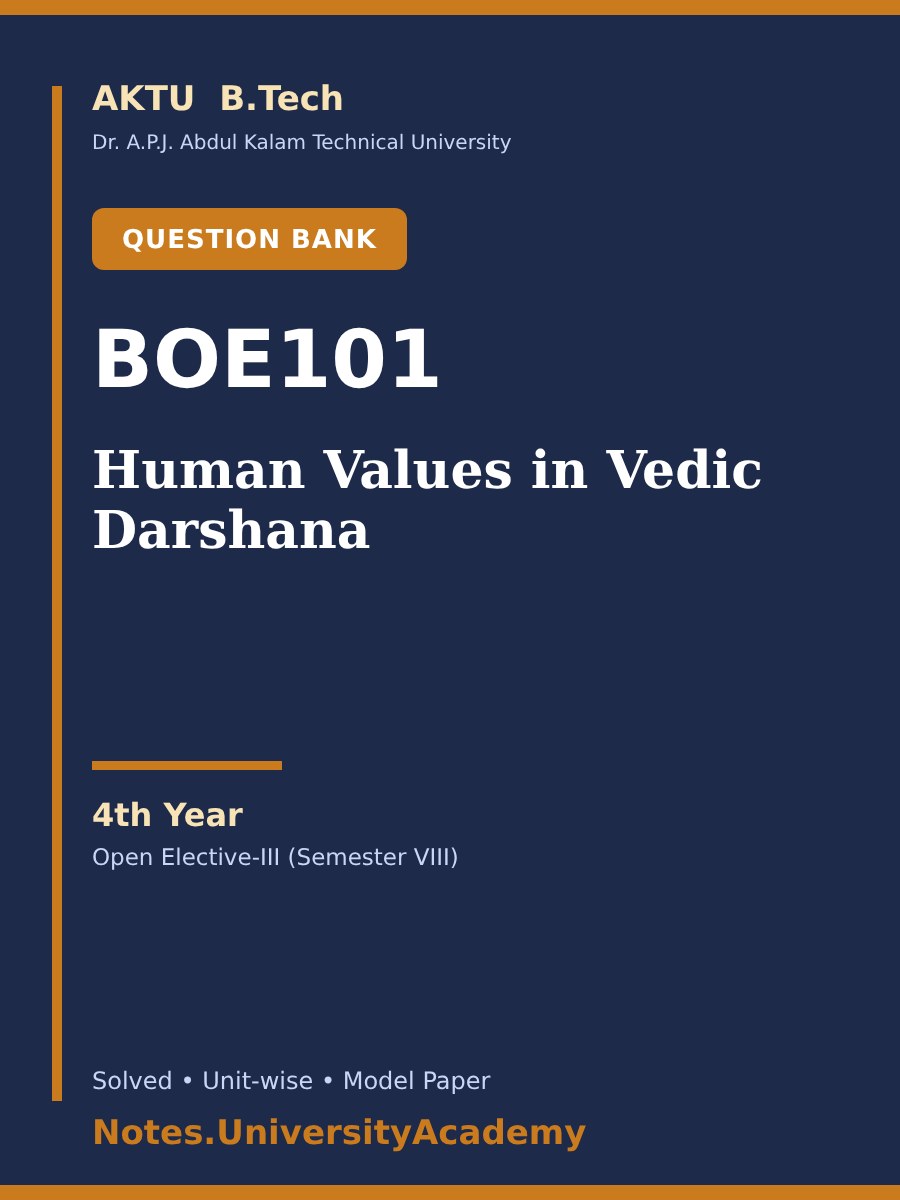
AKTU B.Tech. BOE101 Human Values in Vedic Darshana Solved Question Bank
Human Values in Vedic Darshana BOE101
All syllabus, notes, question bank & PYQ for this subject
by EduQuest by University Academy & ExamCompetition
- English
- 136 pages
- Semester 8
- 0 downloads
- 6 views
AKTU B.Tech. Human Values in Vedic Darshana Question Bank
This EduQuest question bank supports exam preparation for Dr. A.P.J. Abdul Kalam Technical University (AKTU) B.Tech. 4th Year (Open Elective-III (Semester VIII)). It follows the official syllabus of Human Values in Vedic Darshana (course code BOE101) unit by unit, with answers.
What is included
- Complete syllabus as prescribed by AKTU, with course outcomes and text books.
- Examination pattern and trend analysis of previous year questions.
- Unit-wise short answer (2 marks) and descriptive (7 marks) questions with complete answers.
- MOST IMPORTANT and IMPORTANT questions marked, with solved numericals and case-based questions where needed.
- Frequently repeated questions, objective-type revision and a model question paper.
Unit-wise syllabus coverage
- Introduction to Vedic Darśana and Nyāya Darśana (Philosophy of Indian Logic and Reasoning) Introduction to Vedic literature, need to study Vedic Darśana; its origin and subject matter. Introduction to Nyāya Darśana, 16 padārthas (pramāṇa, prameya, saṃśaya, prayojana, dṛṣṭānta, siddhānta, avayava, tarka, nirṇaya, vāda, jalpa, vitaṇḍā, hetuābhāsa, chala, jāti, nigrahasthāna) paṃcāvayava prakriyā (pratijñā, hetu, udāharaṇa, upanaya, nigamana).
- Vaiśeṣika Darśana (Philosophy of Matter) Introduction to Vaiśeṣika Darśana, definition of Dharma, abhyudaya, niḥśreyasa; 6 padārthas (dravya, guṇa, karma, sāmānya, viśeśa, samavāya) – their definition, characteristics and relationship; nitya-anitya; cause-effect relationships; dṛṣṭa-adṛṣṭa karma phala; mindful dāna; śucitā-aśucitā; reasons of rāga-dveśa, avidyā, sukha-duḥkha, etc. and how to get rid of them.
- Sāṃkhya-Yoga Darśana (Philosophy of Spirituality) Sāṃkhya Darśana- Puruṣārtha, the nature of Puruṣa and Prakṛti, 24 elements of Prakṛti, bondage and salvation (liberation), the principle of satkāryavāda, triguṇātmaka prakṛti.Yoga Darśana- the steps of Aṣṭāṃga yoga (yama, niyama, āsana, prāṇāyāma, pratyāhāra, dhāraṇā, dhyāna and samādhi) and the challenges in following them, afflictions (kleṣa)- avidyā, asmitā, rāga, dveṣa, abhiniveśa, different types of vṛttis (pramāṇa, viparyaya, vikalpa, nidrā, smṛti), the process of nirodha of vṛttis; maitri, karuṇā, muditā, upekṣā; description of yama, niyama, āsana and praṇayāma; kriyāyoga– tapa, svādhyāya and īśvara-praṇidhāna; different steps of samād
- Upaniṣad and Vedanta Darśana (Philosophy of God) Introduction to Upaniṣads and Vedanta Darśana; Īśopaniṣad – Idea of renouncement, Karma Yoga, balance of Vidyā-Avidyā and Prakṛti-Vikṛti; Tattirīyopaniṣad – Different names of the God and their meaning, parting message of Guru to the graduating student (Śikṣāvallī), Nature of Brahma and Prakṛti, Methods of Upāsanā; Nature of Ātmā, Description of existence, principle of karma-phala, description of paṃca kośa, nature of mukti , process and way to achieve it, antaḥkaraṇa-śuddhi, different characteristics of paramātmā/brahma, Īśvara, Four qualifications (Sādhana-catuṣṭaya)
- Purpose and Program for a Human Being based on the Vedic Darśana The purpose and program of a human being living on the basis of the Vedic Darśana, clarity and practice of human values and human conduct, the natural outcome of such a program on society, nature and tradition. Vedic system of living in a society - the idea of vratas and varaṇa (freedom of choice with commitment), Varṇa System, Āśrama System, Paṃca Mahāyajṇa, 16 Saṃskāras, etc.
Course details
- University: Dr. A.P.J. Abdul Kalam Technical University (AKTU), Lucknow
- Programme: B.Tech. 4th Year
- Subject: Human Values in Vedic Darshana
- Course code: BOE101
- Category: Open Elective-III (Semester VIII)
- Credits: 3
- PDF length: 136 pages
- Format: PDF
Use this question bank along with the official syllabus, your class notes and the prescribed text books.
Prepared By
EduQuest by University Academy & ExamCompetition
Ratings & Reviews
No reviews yet — share your experience with this item.